Glass has an important advantage when it comes to circularity. It can be recycled again and again without losing quality, provided there is a reliable supply of clean, high-quality recycled glass – known as cullet.
Most glassmaking facilities already use some cullet alongside virgin raw materials such as sand, soda ash and limestone. However, there is significant potential to increase the proportion of recycled glass used. Doing so depends on having enough good-quality cullet available.
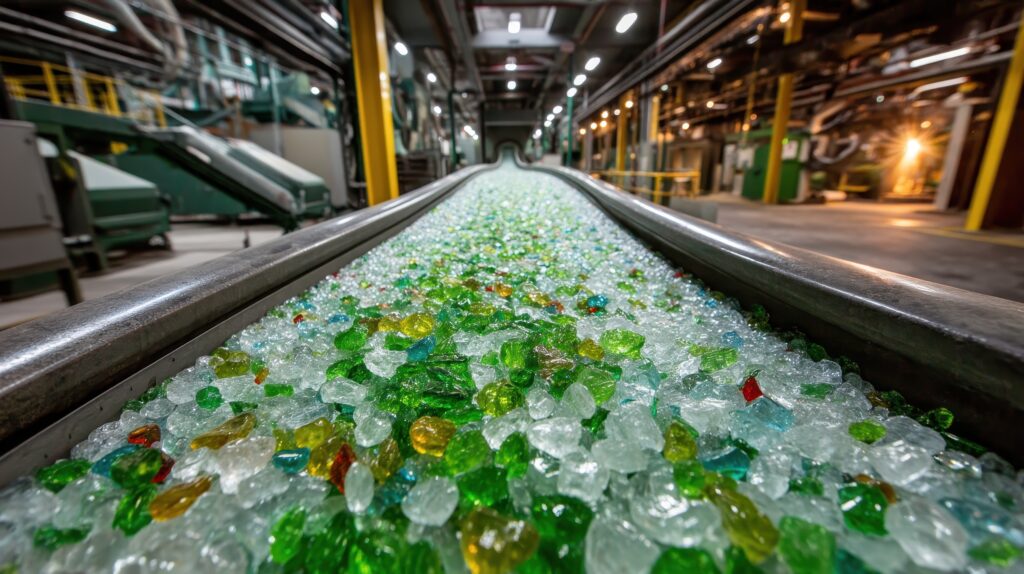
Using cullet brings clear benefits. Replacing virgin raw materials with recycled glass can reduce the energy needed during production and, in turn, lower emissions. As a general rule, a 10% increase in recycled content in a glass batch reduces CO2 emissions by around 2%. Some furnaces are able to operate with cullet levels of up to 70%, which gives us an idea of what can be achieved when a consistent supply of suitable material is available.
The availability of cullet varies considerably from one region to another. In some places, it is collected through kerbside recycling systems. Elsewhere, deposit return schemes, community initiatives and informal collection networks play an important role in recovering used glass, often where formal recycling infrastructure is still developing.
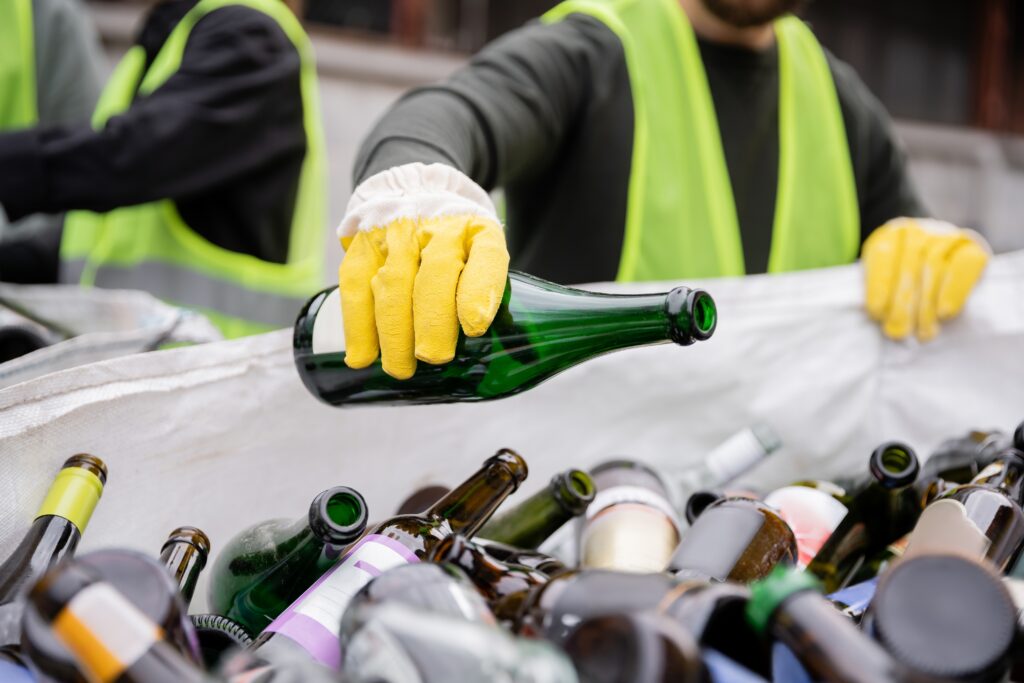
Whatever the collection system, the quality of the material matters. Glass needs to be properly sorted and free from contaminants before it can be returned efficiently to the furnace.
This is why strengthening local collection and sorting capacity is so important, not only in Europe and North America, but across Africa, Asia, Latin America and other regions. A more circular glass industry depends on the creation of effective routes for used glass to return to production wherever glass is made, including in markets where recycling systems are less established.
It is also important to recognise that glass recycling is not a single, uniform process. Container glass, from bottles and jars for example, is generally more straightforward to collect and recycle; flat glass, used in buildings and vehicles, presents different challenges.
Flat glass may be laminated, coated or combined with frames, seals and other materials. It can also be subject to demanding quality requirements, particularly for construction and automotive applications. Recovering it for use in new glass production can therefore require additional separation and processing, including the removal of coatings, PVB interlayers and metal contaminants.
Understanding these differences matters. Approaches that work well for container glass will not necessarily address the challenges associated with flat glass, and each stream needs collection, sorting and recycling systems suited to its particular requirements.
The experience of the people working directly in glass collection, sorting and recycling is an essential part of this conversation. These organisations understand first hand what it takes to manage contamination, maintain material quality and return cullet to production at scale.
ResponsibleGlass wants to hear from those working across this part of the value chain. What is working well today? Where are the barriers to recovering more high-quality cullet? And what changes could help more glass return to the furnace, whether from containers, buildings or vehicles?
Your practical experience will be important as we work together towards a more circular and responsible glass industry.